Medica/CompaMed
Antithrombogenic Coating from BioInteractions—5 Questions at Medica/CompaMed
Arjun Luthra shares insights on the company’s portfolio of innovative medical device coatings that address implant needs.

By: Sean Fenske
Editor-in-Chief
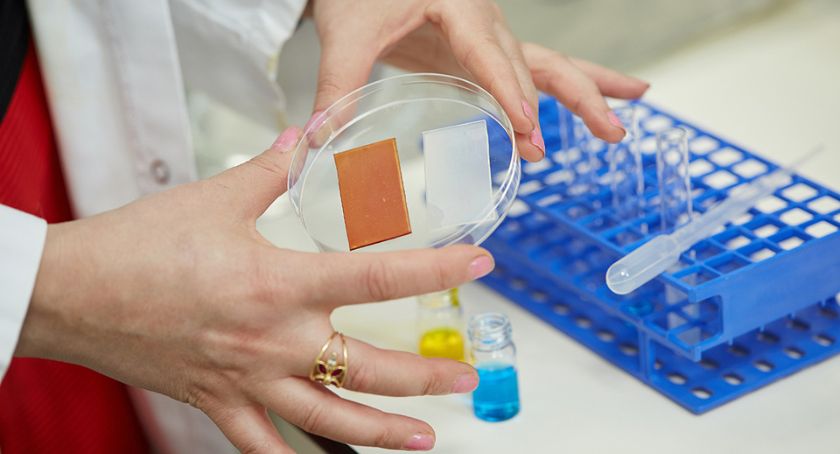
BioInteractions’ TridAnt coated versus uncoated surface.
When the smell of bratwurst fills the air and the cool wind has just a bit of moisture in it, you may be traveling between the enormous halls at the Messe Dusseldorf Center in Germany. Anyone who has visited this event in the past knows the sheer volume of attendees and exhibitors, making it difficult to find a company that may be able to aid with an upcoming design or development project.
With this in mind, MPO presents its annual series of Q&A sessions with a number of supply chain companies exhibiting at the show. Perhaps BioInteractions will have the answers for your current development idea and help you get to the finish line faster. We spoke with Arjun Luthra, commercial director, at the company to get some additional insights on what BioInteractions does and how it may be able to serve you.
Sean Fenske: What technology or service are you emphasizing at Medica/CompaMed this year?
Arjun Luthra: We’re launching AstutePlus—an advanced surface active therapeutic antithrombogenic coating designed specifically to stop fibrin sheath formation and thrombus formation in long-term blood-contacting devices. This presents a challenge for physicians using central veinous catheters, as it affects the safety and effectiveness of treatments like hemodialysis. AstutePlus addresses fibrin sheath formation by preventing it from happening in the first place. It combines both active and passive components to provide a multi-faceted solution. The active agents block the blood cascade mechanism, therefore deactivating platelets which reduces thrombus formation and prevents fibrin sheath formation. The passive elements hinder deposition and adhesion of blood components and proteins on the device surface. The result is an implant that is actively shielded and protected for the lifetime of the patient, therefore providing clinicians more time to focus on caring for their patients.
We’ll also be showcasing our antimicrobial technology—TridAnt—and our cutting-edge coating solution—Assist. TridAnt is an active, localized surface active therapeutic that provides world leading antimicrobial activity to a medical device surface and prevents biofilm formation. It uses a contact-kill mechanism to target the full spectrum of pathogens, which includes Gram-positive and Gram-negative bacteria, as well as drug resistant bacteria (e.g., MRSA), enveloped and non-enveloped viruses (e.g., norovirus), as well as yeast, fungi, and spores (including superbugs such as Clostridium difficile) to drastically reduce infections and improve patient safety.
Assist is a flexible and durable coating that provides a high-performance lubricious surface for long-term applications that can withstand mechanical and chemical abrasions without particulate formation or delamination of the coating on devices.
Fenske: What’s the most common challenge customers inquire about and how do you address it?
Luthra: Medical devices are susceptible to a wide range of clinical issues, which includes biocompatibility challenges, thrombosis, stenosis, infections, and other challenges that reduce the performance of the device and increase patient risk. A major example of this is fibrin sheath formation, which is a common complication for blood contacting, indwelling catheters. This can lead to a disruption in the fluid pathway of the device, resulting in stenosis, thrombus formation, or an embolism. Therefore, the device requires further intervention to resolve this clinical issue. Simple materials are able to prevent blood components from sticking to the device surface, but are not able to de- activate the blood clotting mechanism. Our AstutePlus technology is specifically engineered to de-activate the blood clotting cascade, preventing these major complications such as fibrin formation and thrombus formation that increases patient risk and hinders device functionality.
Another critical issue faced by medical devices is the risk of infection and biofilm formation. This is a considerable challenge faced by all medical implants and is a major risk to patients. The common solution for infections is antibiotics; however, the extensive use of these solutions has led to rising antimicrobial resistance. Antimicrobial resistant pathogens are a difficult challenge with few effective solutions available. Our TridAnt enhanced antimicrobial technology is the world’s leading antimicrobial solution. It is the only solution able to act in seconds against the full spectrum of pathogens and prevent biofilm while enhancing the biocompatibility of the foreign surfaces within a patient’s body.
Fenske: What are the forces driving medical device manufacturers to seek your technology/services over doing it in-house?
Luthra: Medical device manufacturers are increasingly coming to BioInteractions to address clinical issues that impact device performance, patient safety, and therapeutic outcomes. Medical implants are foreign materials inserted into a patient that can bring risks to the patient and the device themselves and can stop working due to rejection from the body. These include thrombus formation, fibrin sheath formation, infection, biofilm formation, restricted movement, and difficulty with insertion and removal of the implant. Simple materials do little to hinder these clinical challenges. However, they do not work for extensive periods of time and still require extensive pharmaceutical regimes for the patient. Therefore, solutions that reduce device complication, minimize patient risk, and help to reduce the need for extensive therapeutic interventions are valuable to the medical device manufacturer, the clinicians, the regulators, and the patients themselves.
BioInteractions has created an innovative portfolio of state-of-the-art materials that helps the device maintain its performance, improve patient safety, and enhance the therapeutic benefits to the patient all on the implant surface itself. Therefore, we are able to reduce the burden for our partners and support their device development to ensure their implants are not susceptible to these clinical issues. We combine these innovative technologies with a partner-focused service to help with the development of devices, support the regulatory process, and provide commercial manufacturing services. When organisations partner with us, they can leverage our expertise in developing world leading technologies to improve medical device performance, enhance patient safety, and evolve therapeutic benefits.
Fenske: In what ways is your company able to aid in getting a product (project) to market faster?
Luthra: BioInteractions helps medical device manufacturers bring products to market faster by supporting our partners to navigate the extensive development process and the complex regulatory landscape. Our dedicated Product Pathway Partnership team streamlines the entire process by taking on these critical, yet time-consuming steps, and reducing the burden on our clients, allowing them to avoid costly delays and focus their resources on core innovation.
Universally, medical product developers and manufacturers navigate a highly regulated and particularly constrained environment. Our Product Pathway Partnership team works closely with clients to navigate all areas, including optimization of the technology and application process for the specific device, fixture design and tooling, biocompatibility testing, support of regulatory submission, and commercial coating partner services. We provide guidance along a strategic pathway with a focus on offering a flexible approach to meeting all of the ever-revolving regulatory demands on a wide variety of devices with varying geometries and substrates. The aim of which is to advance clients on to the market in the most effective way possible.
Alongside the expanded Product Pathway Partnership, our integrated service streamlines the research and development of new innovative solutions using our more than 30 years of expertise and a range of novel resources to determine the optimal material for your device. BioInteractions’ legacy of innovating state-of the-art solutions allows us to create bespoke offerings for the unique challenges of medical device building on the innovative solutions on offer today. This unique aspect of the service draws on our expertise and knowledge in confronting critical clinical issues with innovative solutions for a wide variety of devices, which enables us to provide revolutionary and state-of-the-art solutions for our partners and their devices. We have combined our 30 years of expertise to create a complete offering that includes our ground breaking technologies, the ability to create new solutions and our partner-focused services to support the development and regulatory requirements for new medical device offerings.
BioInteractions is located at Medica/CompaMed in Hall 8B, Booth/Stand N20.