Medica/CompaMed
Full-Service Contract Manufacturing from Providence—5 Questions at Medica/CompaMed
Brett Freeman reveals the significant advantages of working with a contract manufacturer focused on rapid scale up and quicker time to market.

By: Sean Fenske
Editor-in-Chief
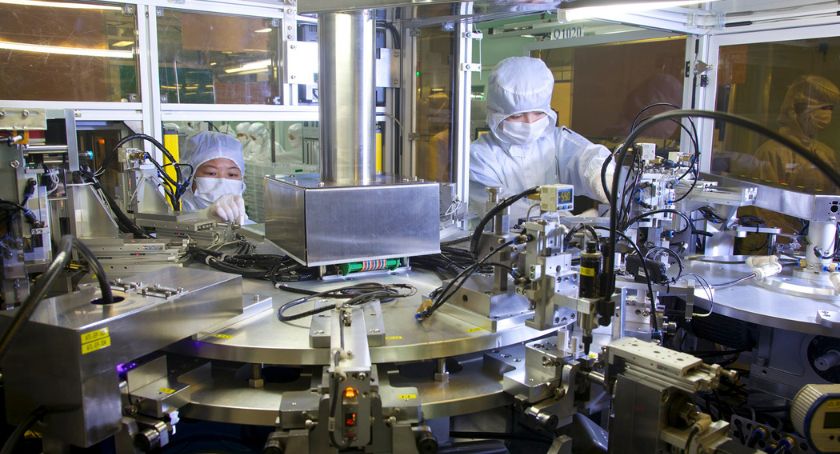
Class II medical device semi-automation.
When the smell of bratwurst fills the air and the cool wind has just a bit of moisture in it, you may be traveling between the enormous halls at the Messe Dusseldorf Center in Germany. Anyone who has visited this event in the past knows the sheer volume of attendees and exhibitors, making it difficult to find a company that may be able to aid with an upcoming design or development project.
With this in mind, MPO presents its annual series of Q&A sessions with a number of supply chain companies exhibiting at the show. Perhaps Providence Enterprise Limited will have the answers for your current development idea and help you get to the finish line faster. We spoke with Brett Freeman, chief sales officer, at the company to get some additional insights on what Providence does and how it may be able to serve you.
Sean Fenske: What technology or service are you emphasizing at Medica/CompaMed this year?
Brett Freeman: At CompaMed, we are promoting our quality-focused, medical device contract manufacturing services that support DFM, tool making, injection molding of plastics and silicon rubber, SMT, assembly, packaging, testing, and sterilization.
Fenske: What’s the most common challenge customers inquire about and how do you address it?
Freeman: The most common challenge seems to involve attempting to determine which region of the globe in which to manufacture. There is often the trade-off of lower cost versus being closer to the market served. With our manufacturing locations in China, Vietnam, and Mexico, we are supporting our customers’ efforts in best understanding total cost of ownership.
Fenske: If you could give one piece of advice to companies seeking a manufacturing partner before they make a decision, what would it be?
Freeman: Bring in a contract manufacturer as early as possible. This includes having them involved at the product development stage. You can also couple this when determining the best location in which to manufacture.
Fenske: What are the forces driving medical device manufacturers to seek your technology/services over doing it in-house?
Freeman: Regardless of the medical device manufacturer’s size, it may make more sense to outsource production versus manufacturing in-house. Larger medical device companies may be manufacturing certain product lines in-house, but it could be difficult to handle them all. They can only scale-up production based on their own operations’ ability to ramp up or find the internal resources to support it. They may be less efficient, slower to respond, and lack the capacity or expertise. Large, medium, or smaller medical device companies may want to focus their resources on research & development, product ideation, marketing, and sales. They can then defer to outsourcing partners such as Providence Enterprise that can scale up more rapidly and have the capacity, capabilities, and resources to meet tight timelines in different parts of the world.
Fenske: In what ways is your company able to aid in getting a product (project) to market faster?
Freeman: We have dedicated teams that can support onboarding a project quickly. Our diverse capability set, expansive capacity, and project-based teams are focused on supporting tight timelines provided by our customers. In addition to medical devices, we also have experience in manufacturing fast moving consumer goods so our internal processes are set up for efficient, quality-centric manufacturing with the goal of getting to market fast.
Providence Enterprise Limited is located at Medica/CompaMed in Hall 8A, Booth/Stand R15.